
Narrative in Ida
Narrative theories in Ida

Ida links to Propp’s character types because:
Ida is the Hero, She listens and is under by the dispatcher and donor as well as being the main character
Wanda is the Donor/Helper, because she takes the main character on the journey
The mother superior was the Dispatcher, sent Ida on her journey
The saxophone user plays the role of the Princess, Love interest
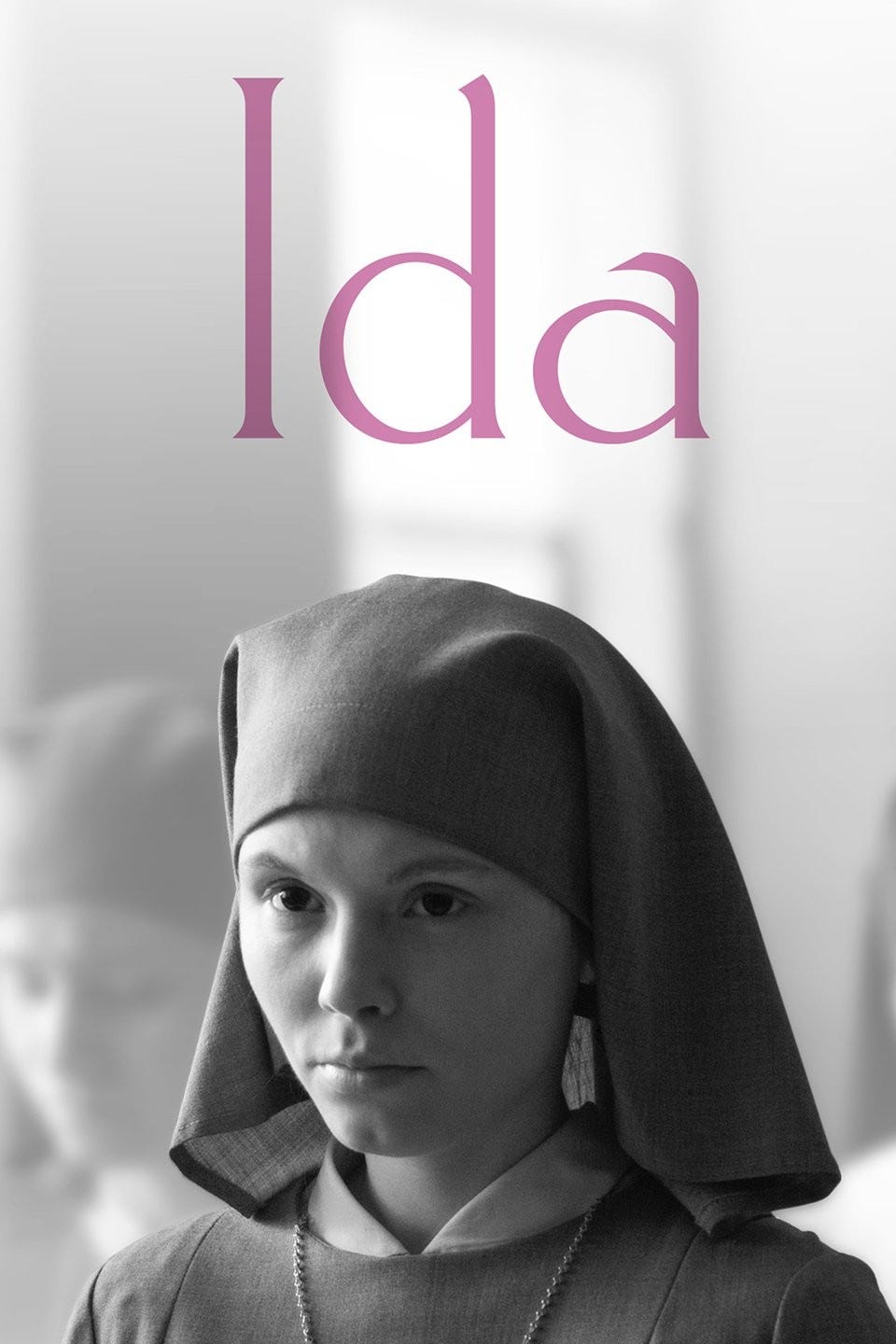
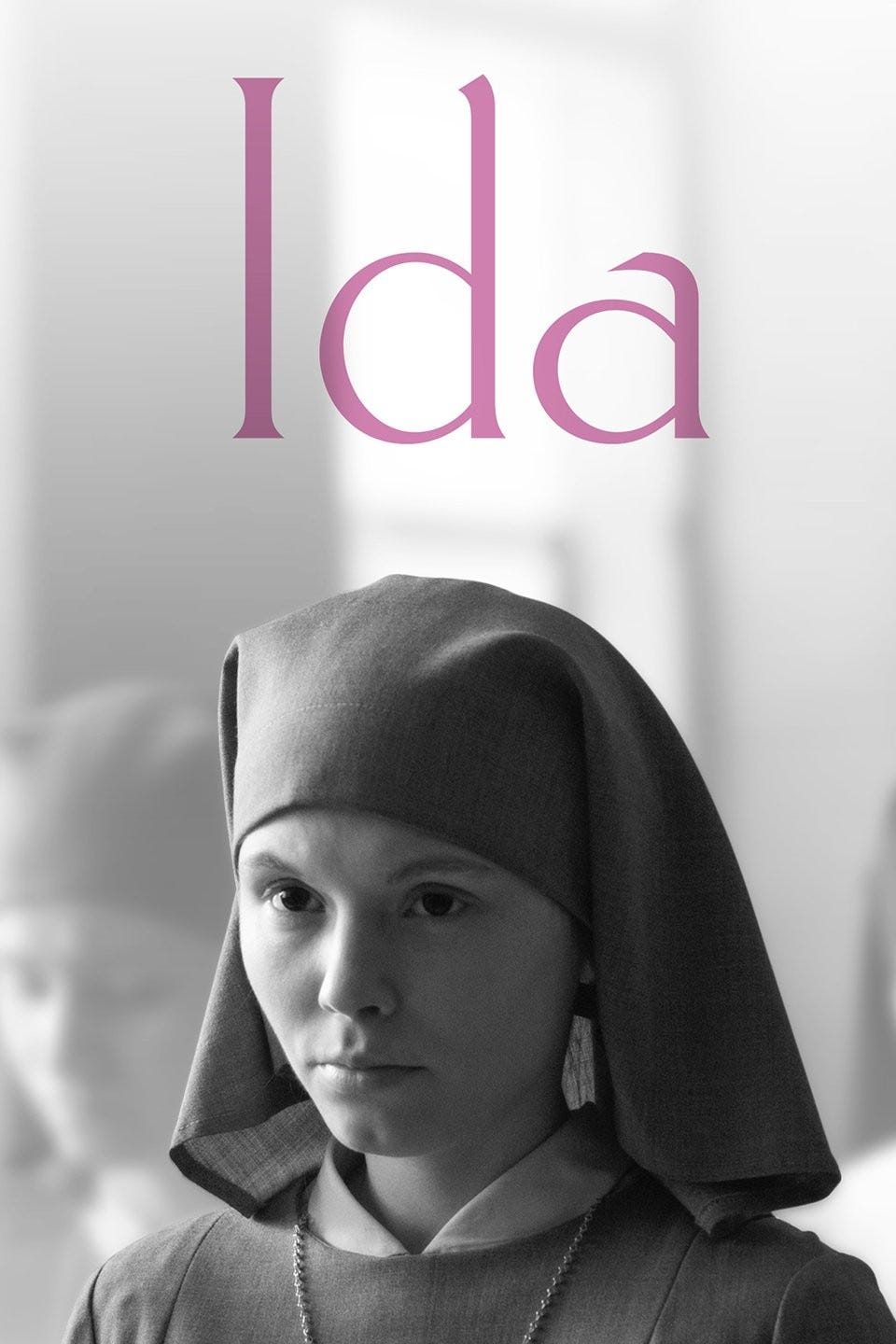
Promotional image for Ida, (2013, Pawel Pawlikowski)
However, this film does not seem to link with Propp’s narrative functions theories because there is not the usual hero and villain story that is identified in that. Mainly in the introduction section, which this film lacks. However it does follow the later points so overall it does line up with Propp’s theories.
Another theory to link Ida with is Tzvetan Todorov’s Equilibrium Theory because it follows the structure of his theory very well up until the end of the film. This is because we start the film seeing the equilibrium of Ida’s life in the convent but then is a disruption in the form of her having to go to find her only alive relative, her Aunt Wanda. Then is the recognition of the disruption which comes in the form of her meeting and talking with her aunt and fourth is the attempted resolution which takes up most of this film and involves Ida searching for her family to give them a proper burial. however, there is not really a new or restored equilibrium at the end of the film as Ida finished the film by getting into the bad things her aunt did and now seeming to be lost.
Next is Levi-Strauss’ binary opposition theory which fits this film well due to the clear opposition of the characters of Ida and Wanda, Wanda is someone who has clearly let themselves go to the point where by the end of the film she has committed suicide, which (at least at the beginning of the film) is directly opposite to Ida’s lifestyle as she has grown up in a convent and is becoming a nun.
The final narrative theory to compare with Ida, (2013, Pawel Pawlikowski) is Roland Barthes’ Narrative Codes theory which involves action codes and enigma codes. There are both in Ida and some important ones are seen are Wanda’s suicide (an action code) and along with the characters, the audience must attempt to piece together what happened to Ida’s family (an enigma code)
The next question to think about is why has this aspect ratio been chosen and I believe that it was chosen in order to portray Ida through the framing as small to show how little control that she has over her life.
Then is the black and white colour scheme which is a choice as this film was released in 2013 so the technology for colour film was readily available and I believe that this decision was made in order to show the audience the two sides of Ida’s life, her new life as a nun in a convent and the life she was born into, a Jewish family from the 1940s.
The film also uses very long takes and only diegetic sound and this is to be able to show the seriousness and realism of the film and how it is not a silly adventure but really a film with deep psychological questions being asked to the audience about life even after the war for people who could think that they are not involved.
The obscured faces are used to hide unimportant details so the audience can focus on Ida and how she feels which is shown through the emotion that is on her face.
Overall, I think this film wants the audience to think that is is a realistic journey of someone finding out what happened to their family throughout the second world war and represents the feelings of isolation from someone who grew up without a real family by showing Ida on a journey to find out as much as she can about her real family
Really good post, Charlie. This is Grade 8/9 stuff...